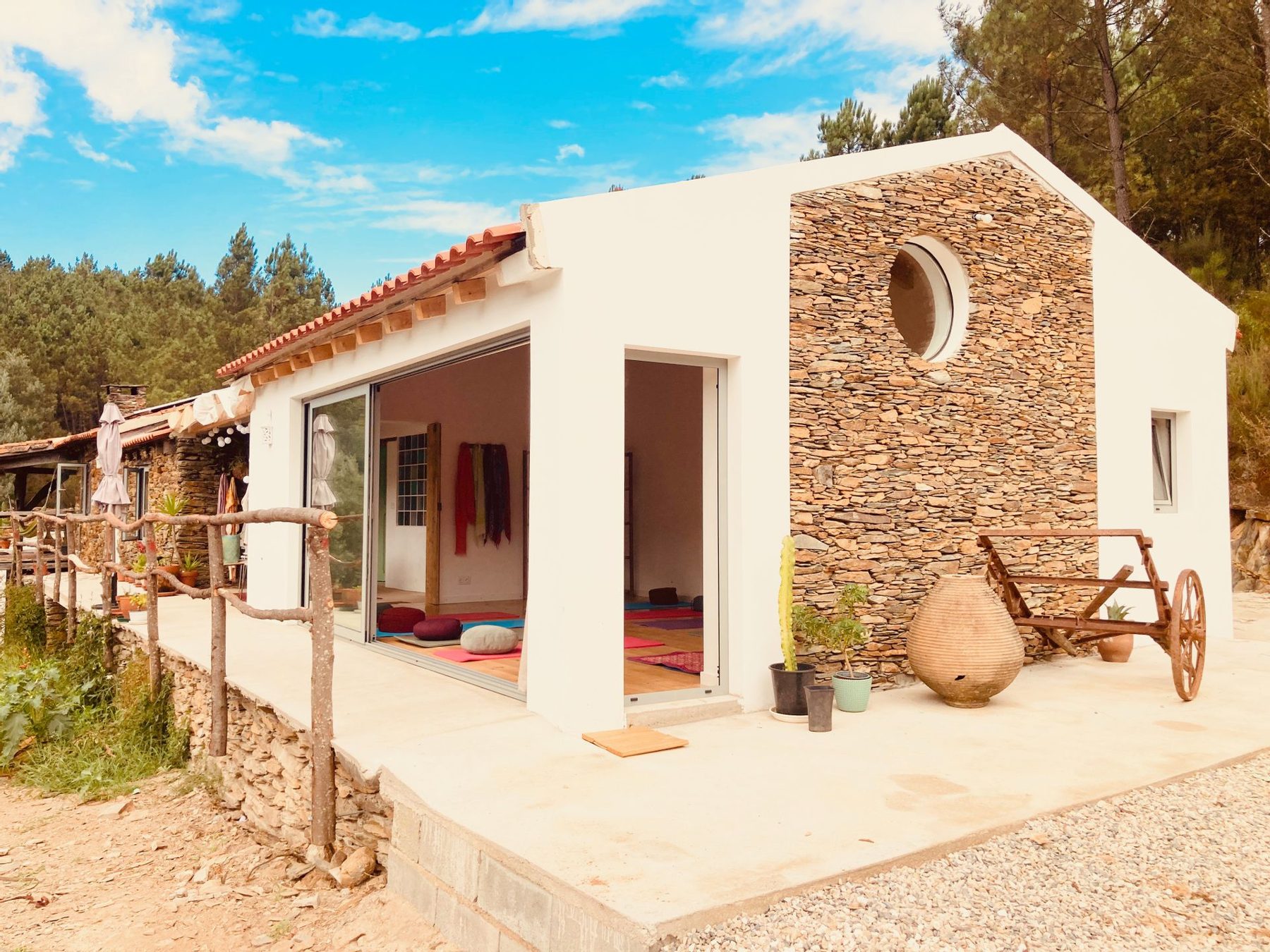
The house, stone and white plaster among the pines
A guide to ValeMioto, the millhouse on the river

Welcome to the house.
Here's how it lives.

Wood beams, a wild river, a house that runs on solar and good faith. Read it once before you arrive, and once more before you swim.

QR code to join the ValeMioto wifi
Wifi

Network: ValeMioto    Password: MedadeMouros

scan to join automatically — never unplug the routers

Water drink from the mains tap, not the well tap
Power solar-fed — go easy on rainy days
Swimming uninsured, at your own risk
Neighbor please read before your first swim upriver

This land is wild, and a lot of it is old. It's a home, not a hotel — used and comfortable rather than immaculate — and it asks a little care in return for the quiet: where to step, when to close a door, which water to drink. None of it is complicated. Most of it is just knowing before you need to know.

1
First, the ground you're standing on

Arrival & keys

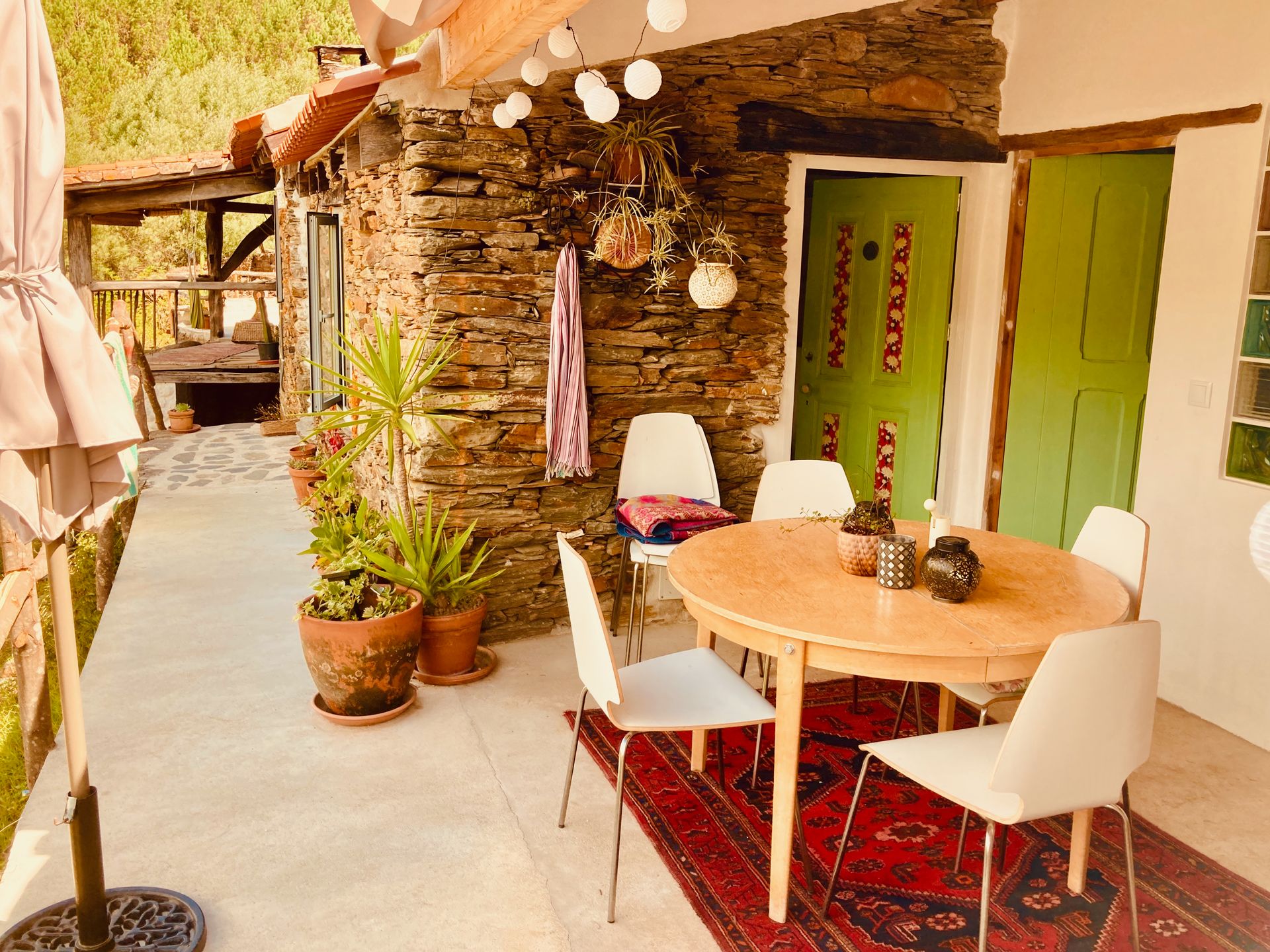
The terrace entrance, two green doors side by side
The two green doors — the left one is the kitchen entrance, and where the keys are hidden.
  • The location: open ValeMioto in Apple Maps — worth saving before you set off.
  • The last stretch in is a dirt track, a mile or so long. Most cars manage it driven slowly and carefully — higher clearance helps, and a 4x4 is ideal if you have one. If you're planning to mostly stay put once you're here, a standard car is usually fine.
  • Park by the house, or above near the camping area — either is fine.
  • All the keys live in a bowl on the shelf by the front door. The house usually isn't locked up — but if it has been for your arrival, the front door key is hidden under the stone behind the clippers with white markings. That one key opens the bowl, and the bowl opens everything else.
  • If you're using the camping area, the stairs by the parking spot lead down to a simple outdoor bathroom — loo, basin, and shower, shared with the tent guests.
2
Doors, blinds, and the sun

The bedroom studio

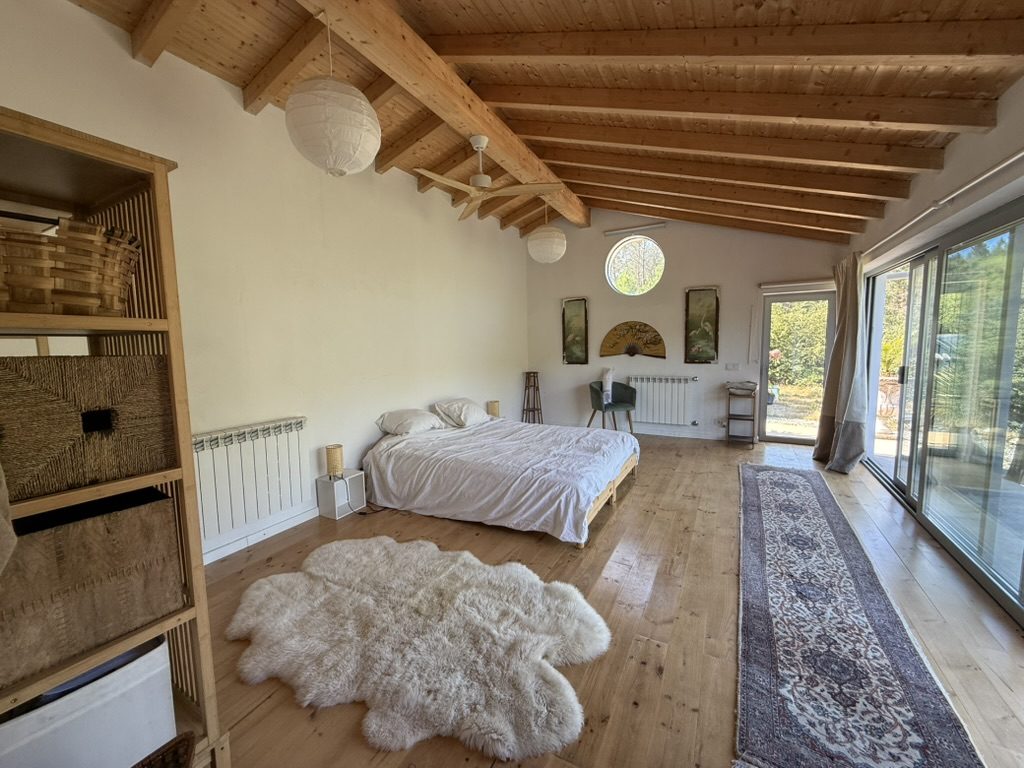
The bedroom studio, vaulted wooden ceiling, sheepskin on the floor
The bedroom studio — beamed ceiling, entered through the pull-down door.
  • The ceiling fan remote lives on the ledge above the door — return it there when you're done, faster or slower is your call.
  • Two blind systems: a blackout blind on a pull-cord beside the door, and ordinary blackout curtains you draw by hand.
  • The doors open two ways — crack the handle upward for a window, or swing it fully sideways like a door. Push the handle down to lock.
  • Never open all three doors fully at once — it amplifies the sun and heats the room fast. A gap is enough for air to move through.
  • The little router on the shelf extends the wifi into this room. Leave it plugged in.
  • Lock this door properly when you leave the room, and lock it behind you if you leave the house.
  • A couple of boxes down below are the owner's personal things — everything else is yours to use for storage.
3
Where you'll spend most evenings

Terrace & kitchen

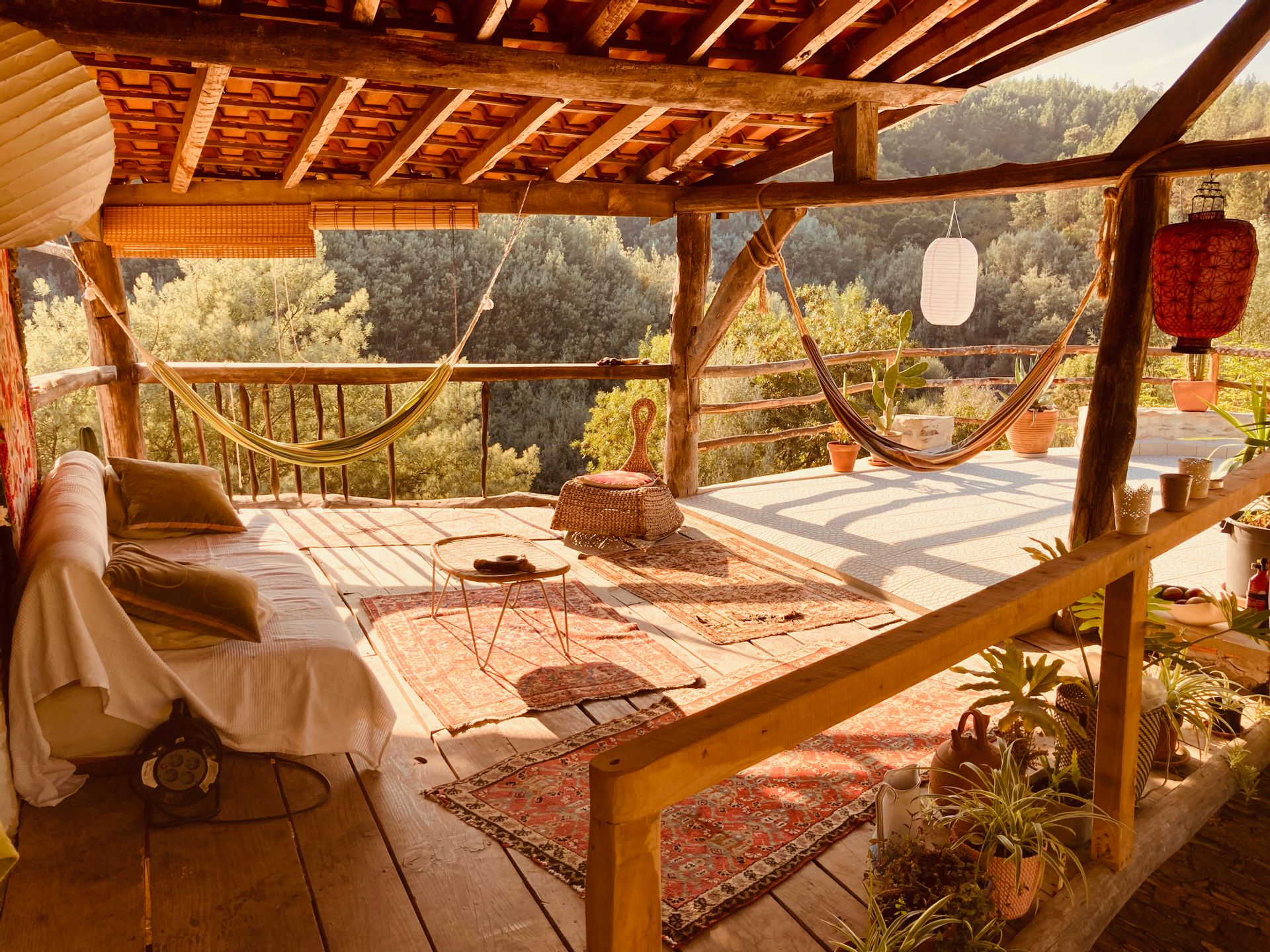
The upper terrace with hammocks and a daybed, looking out over the wooded valley
The upper terrace — hammocks, a daybed, and the valley below.

Terrace

  • The power strip under the desk is for charging or working outside — use it freely.
  • Leave the router here plugged in; it's what carries the wifi outdoors.
  • The sitting-room door onto the terrace has a fragile mechanism — please don't use it. Go in and out through the other door instead.

Kitchen

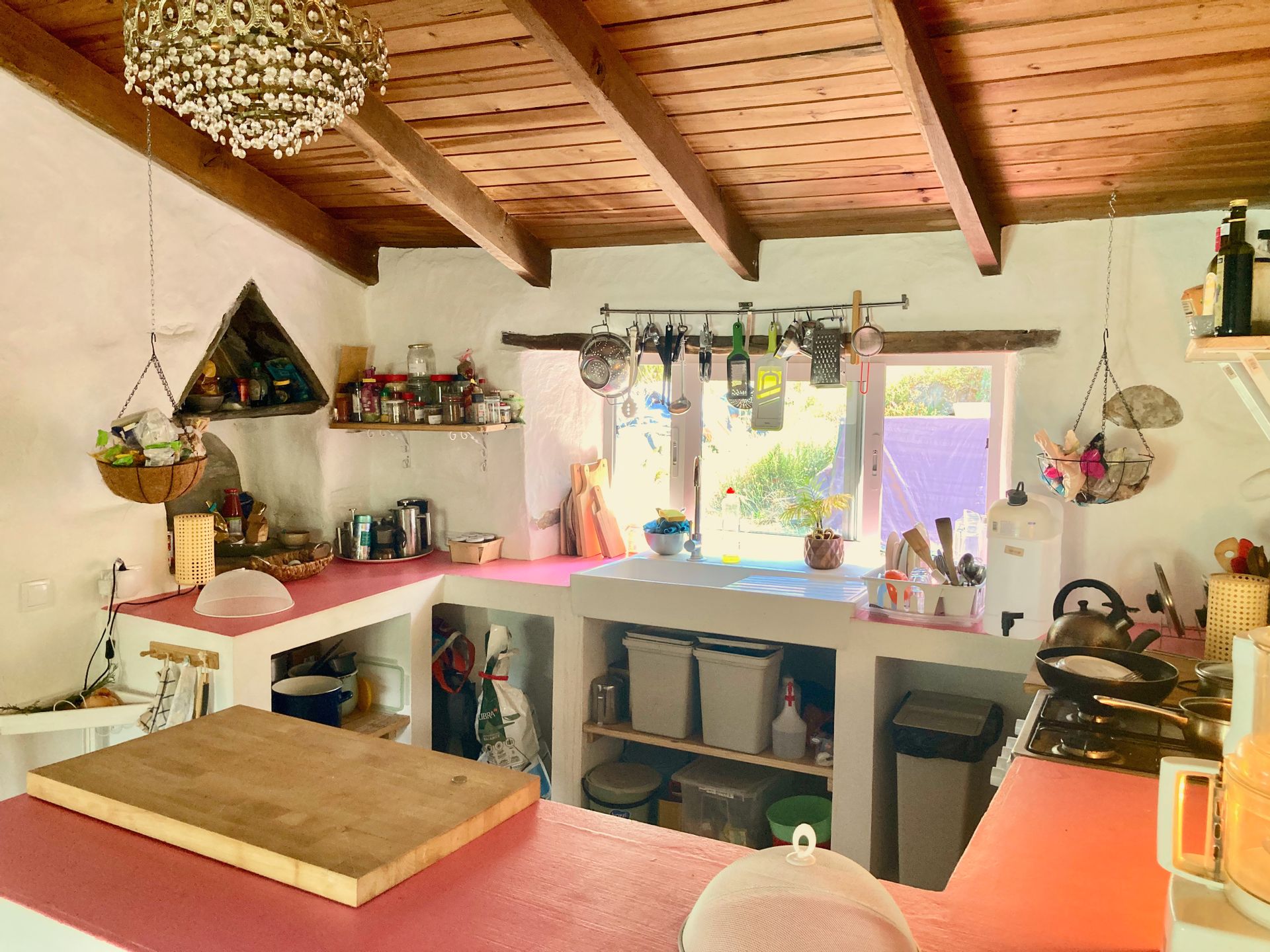
The kitchen, wood-beamed with pink counters and the window over the sink
The kitchen — the gas oven lights from underneath, matches and lighters on the counter.
  • The gas oven and hob light the same way, and it isn't obvious: turn the gas on, then feed a lit match or lighter through the small hole underneath to catch the flame. There's no top grill — it's a simple oven. Matches and lighters are kept on the counter.
  • The gas bottle in use is in the machine room by the washing machine, with a spare beside it. Heavy use — baths especially — burns through it faster, and a refill from the village is an extra cost.
  • Drink the mains water from the village, not the tap water from the property's own well — the well hasn't been tested. Spare bottled water is kept on hand so you won't run out.
  • Sorting: general rubbish in one bin, plastic/tin/cartons in the next, paper and glass in the last. Any food scraps, cooked or raw, go in the compost bucket under the sink — when it fills, swap in the spare bucket and carry the full one out to the compost pile (see Stop 5).
  • Light switches are grouped in twos and threes rather than one-per-bulb — take a moment to find which switch does what before dark. The two plug sockets near the door are reserved for the Starlink equipment; leave them be.

The bathroom

  • It runs to a cesspit, so the local rule applies: if it's yellow, let it mellow — if it's brown, flush it down. A few uses between flushes is normal.
  • Paper goes in the small bin beside the toilet, not down the bowl, unless you're flushing anyway.
At night: the bees living near the house are drawn to indoor light. Never leave a door open with the bedroom or bathroom light on after dark — close the door first, or they come in, die by the light, and can sting if you step on one barefoot. It's happened before.
4
Solar, backup, and the cool room

Storeroom & power

  • The room under the stairs stays naturally cold — use it for vegetables and anything the small kitchen fridge can't fit.
  • River shoes in a range of sizes, and a bag of inflatable rings for kids, are stored here for anyone to use.
  • A generator backs up the solar system if you're ever caught out, petrol stored alongside it. It's a pull-start. In the colder months, when the sun doesn't show for a couple of days, you might need to run it for an occasional hour — it's rarely needed otherwise.
  • In spring and autumn, a wood-burning boiler carries most of the heating — radiators and direct heat both. Wood can be arranged in advance, or sourced from a supplier at the top of the track.
  • The washing machine is old-fashioned: set the program, then lean a knee against the door to seal it and wait until you hear water running. Don't run it on rainy days — it draws on solar power, and there won't be enough to spare.
5
The path down, past the ruins

The land & the old mill

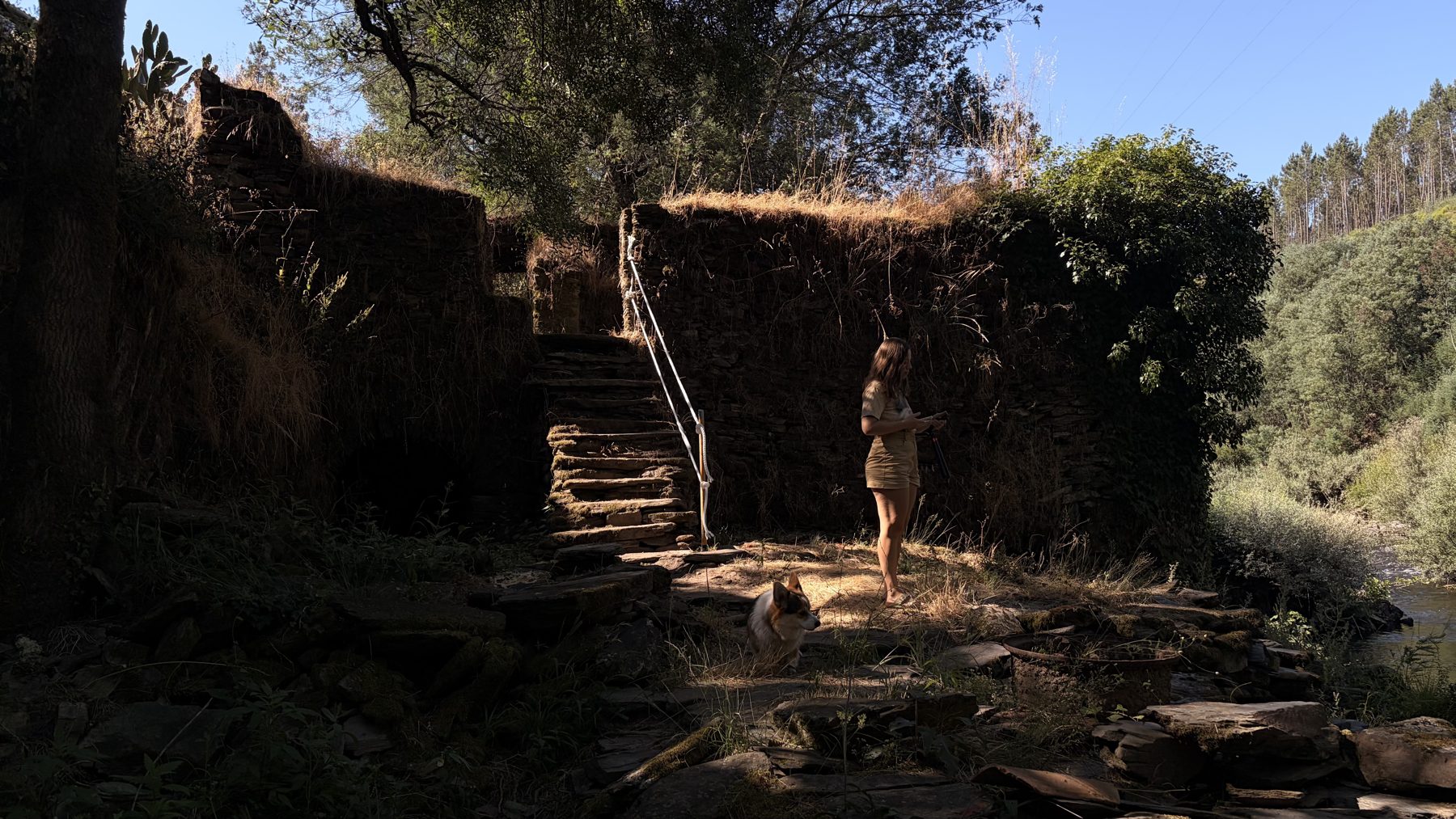
The path through the land, uneven ground and old stone
The path down — uneven, old, and worth walking slowly.
  • The compost pile is a short, uneven walk from the house, past the old outdoor oven and the ruins. If the bees are heavy along the usual path, cut through the house or take the lower route instead.
  • There's a compost toilet along the way, too, for anyone who'd rather not use the cesspit — paper and sawdust are provided in the bucket beside it.
  • Tip the compost bucket down the marked hole near the old ruin. Check the ground is solid under you first — that structure is worn and a little unstable.
Own
risk
no cover

The path to the river passes straight through the old mill house — genuinely falling down, with no insurance on the building. There are holes in the floor in several corners; watch children closely here. A rope is fixed along one stretch for balance. If uneven, wild ground and old stone aren't your comfort zone, this is worth knowing before you commit to the walk.

6
Three beaches, one river

Swimming

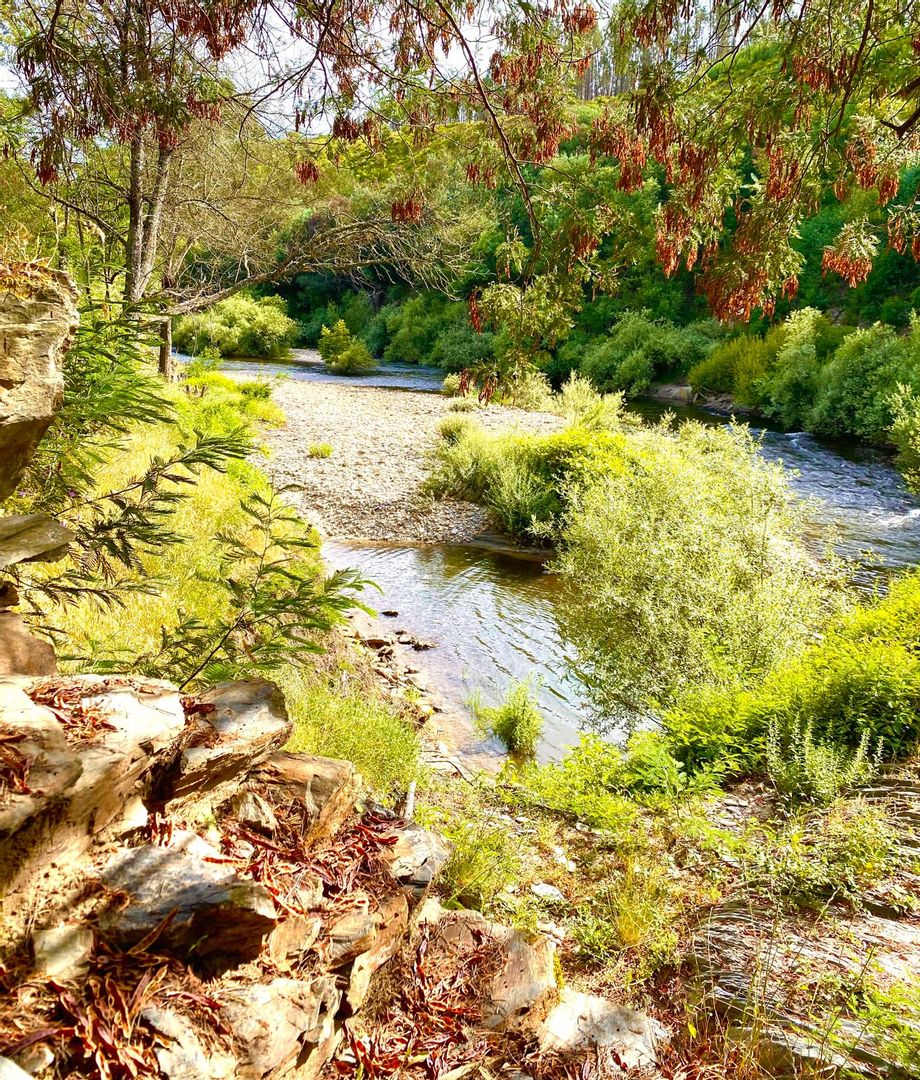
The river below the house, pebbled banks and green brush along the water
The river — pebbled banks, slow pools, and three beaches to choose from.
Swim
at your
own risk

Nobody is watching this water, and nothing here is insured. Children need an adult in the water with them, and that adult carries the responsibility. Upriver dam gates open at certain times of day and can speed the current — it runs faster in June than by July or August, when things settle.

The near beach

closest to the housemost used

Pebbled — river shoes help. Shallow with an uneven bottom that shifts between shallow and a little deeper. The easiest of the three to get in and out of.

The deep pool

deepest waterrocky approach

Reached by crossing uneven, sometimes slippery rocks — go carefully. Not a comfortable entry or exit point right at the rocks; a sandier stretch and a diving rock nearby are easier. A hidden rock sits near the surface partway across, worth knowing before you dive. From here you can swim or walk downriver about half an hour to a weir and back — roughly an hour round trip — and there's a gently sloping bank further along for anyone who'd rather wade in than dive.

The far beach, by the island

used leaststorm-damaged approach

Behind a tree at the end of a stretch marked by last year's storm — climbable, not effortless. A shallow pool sits here. Walk to the far end and cross at the small island to reach the calm, tranquil water upstream — swimmable and walkable for close to an hour toward Kožar, and quiet the whole way.

  • Kayaks are kept down by the river for anyone to use — same rule applies: no cover, your own risk, adults responsible for children.
7
A small favor, kindly asked

Being a good neighbor

The van across the way

A neighbor lives quietly across from the parking area — private by nature, and the kind of person who keeps an eye on the house when no one's here. He's asked, gently, that guests avoid the stretch of river just upriver and to the left of the near beach, past the small island, where the water runs still and deep. It's where he washes and bathes in the mornings.

Downriver and the beach directly in front of the house are entirely open — swim there freely. It's technically a public right of way either way, so nothing is off-limits by law. It's simply a courtesy, for someone who's been a good neighbor in return.

8
Who else lives here

Living alongside the land

Bees

A long-established colony lives in the exterior wall, part of the ecosystem here and left undisturbed. Give them room near the terrace and path, or take the alternate route.

Mosquitoes

Occasional in the warmer months. Nets and plug-in repellents are provided in the rooms.

Ants

Turn up wherever you sit down on the grass — worth a glance before you settle in.

Lizards, geckos & frogs

Around the river's edge and the walls, harmless, and part of the scenery.